Thinking about a heat pump? Assess your ducts first
Heat pumps have really taken off. There’s been genuine interest among my clients to get off gas.
Rebates and no-interest financing have certainly helped. Ontario homeowners can access significant rebates for high-efficiency electric heat pumps, primarily through the new Home Renovation Savings Program.
Beware of companies that pitch the equipment without a proper home assessment, though. There is more to converting to a heat pump than choosing a new unit. This is important because they’ve been getting some bad press due to complaints about poor performance. The problem is not the unit. Rather, the heat pump is incompatible with the existing HVAC distribution method, which is often a ductwork system.
If the ducts are too small for the heat pump, you’re going to have problems. That’s because heat pumps require higher volumes of airflow to deliver the same heat as a gas-fired furnace.
Furnaces blow hotter, higher-velocity air at 49°C or higher compared to heat pumps, which move larger volumes of air at lower temperatures, between 32.22°C and 43.33°C.
Undersized ducts force the blower motor to work harder to push air through these restricted spaces. The typical results are higher static pressure, uneven heating and cooling and a frozen indoor coil in the summer, leading to excessive noise, poor performance and system failure.
Many modern heat pumps can adjust their capacity to fit existing ductwork better but they still require proper airflow.
Even if the ducts are large enough to accommodate a heat pump, leaks from unsealed seams can reduce performance – not uncommon in older systems. Happily, this is an easy fix. A typical go-to is Aeroseal – a benign and effective acrylic-based substance, which is sprayed in through the ducts to fill gaps.
For homes with radiant systems, air-to-water options are available – but they work best for home heating rather than cooling, which can create condensation.
If you are interested in swapping out your gas-fired furnace for a heat pump, I encourage you to hire an HVAC company that will properly assess your home system.
HVAC specialists will typically do what’s referred to as a Manual J, which determines required heating and cooling. Often overlooked is a Manual D, which checks if the existing ducts are adequate. If you have ducts, insist that the company do this essential step.
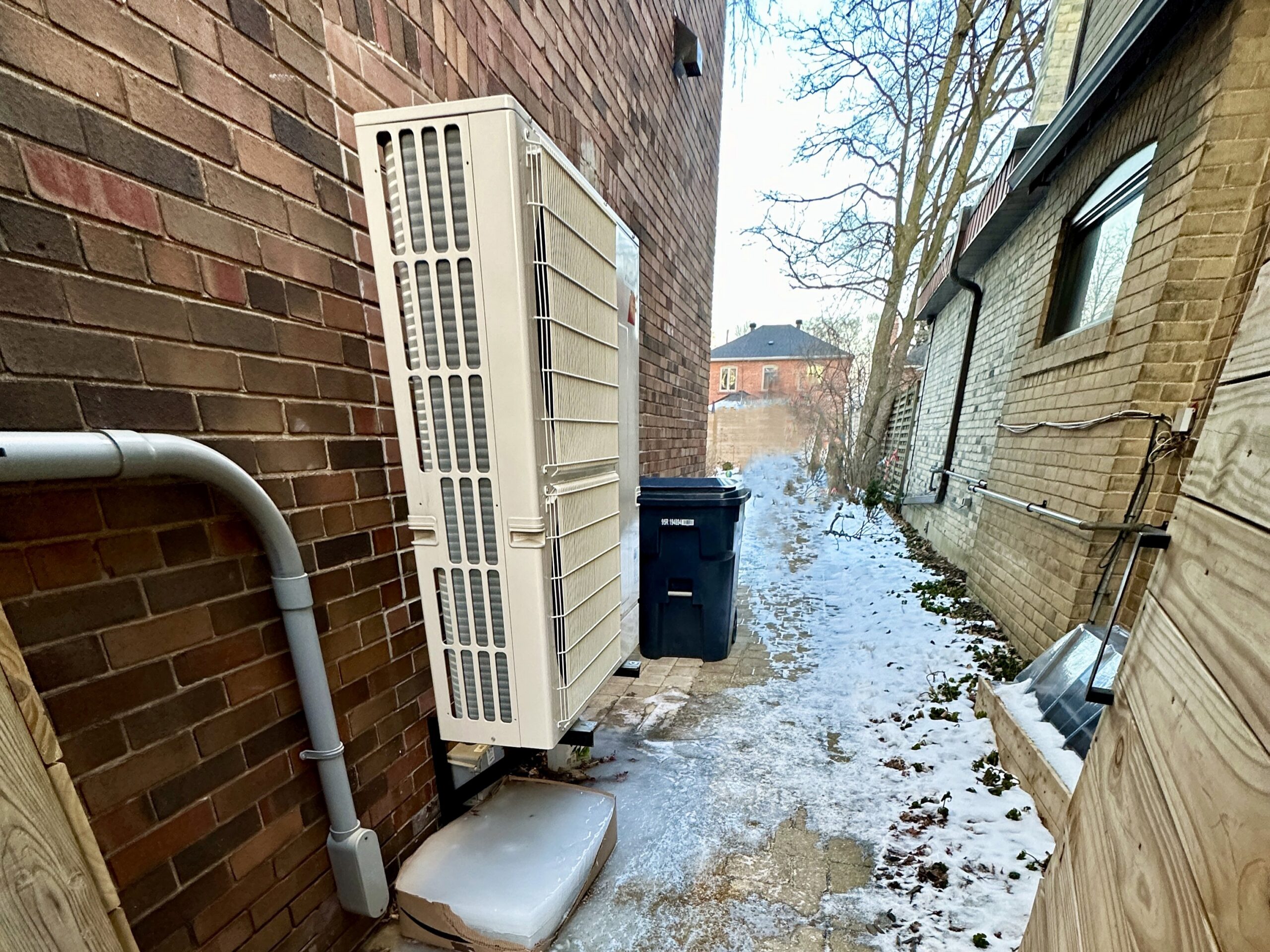
That’s indoors. Outdoor unit placement has its own challenges. In tight urban settings, where there are limited options for sitting equipment, condensate from the unit can drip and freeze onto access paths, creating dangerous walkways. This can be avoided by directing water into drainage.
I’ve also discovered that typically, more clearance is needed for airflow than the manufacturer’s instructions indicate – and Toronto’s bylaws allow. To meet its decarbonization goals, the City is looking into removing zoning barriers to accommodate heat pumps, as well as solar panels and energy storage devices.
If you are considering a heat pump, I recommend a proper home assessment sooner rather than later. This will help you understand your options and plan for costs.

By Chris Phillips, Founder and President of Greening Homes Ltd.
Featured photo: Heat pump condensing unit ice formation. Photo: Yvonne Bambrick.